Where brand thinking becomes business growth
Most companies invest in how they look before figuring out what they stand for. We start where it matters, then build everything from there.
Brands we've built strategy for









The visuals aren't the problem.
The thinking underneath is.
Most businesses come to us because something feels off. The logo doesn't feel right. The website isn't converting. The marketing spend isn't working the way it should. The brand looks fine but it isn't doing anything.
The instinct is to fix the visuals. New logo, new colours, new website. And sometimes that helps. But more often, nobody has clearly defined what the brand actually stands for, who it's really for, and why anyone should choose it.

Great visuals built on unclear strategy look beautiful and say nothing.
Brand identity is what your brand looks and sounds like. Brand strategy is what your brand means to the people you are trying to reach, in the market you are competing in, at the stage of growth you are at.
This is why every engagement at GreySpace, whether it starts with a logo brief or a full rebrand, begins with a strategy conversation. Because the work only holds up when the thinking underneath it is sound.
Brand Strategy
- Positioning
- Audience
- Market gaps
- Purpose
- Personality
Brand Identity
- Logo
- Colours
- Typography
- Tone of voice
- Visual language
Four phases.
Every engagement.
No exceptions.
Brand strategy is not a workshop. It is a documented process, built with your inputs, refined through your feedback, and designed to hold up under real business decisions. Nothing moves to the next phase without your sign-off.
Discovery and Alignment Session
We understand the business before we touch the brand. Vision, competitive landscape, commercial ambition, and the reason the brand exists beyond making money.
Strategic brief and shared alignment on direction, challenges, and opportunity.
Research and Market Intelligence
We map the market: competitors, white spaces, audience behaviours, and positioning territories available to own. Not a trend. A long-term, defensible position.
Competitive analysis, audience profiles, and a positioning opportunity map.
Brand Strategy Framework
Brand Core (purpose, vision, values), Brand Positioning (audience, market, differentiation), and Brand Persona (personality, archetype, tone of voice). Versioned iterations with documented rationale.
Full Brand Strategy Framework document, delivered in versioned iterations.
Presentation and Handover
The final strategy is presented with full rationale: not just what we decided, but why. The approved document becomes the brief for all identity, communication, and marketing work.
Approved Brand Strategy Document, ready to brief all downstream work.
The four pillars of every engagement

Three situations.
One common thread.
If any of these sound familiar, let's talk.
Book a discovery callEvery strategy we build starts with a real business problem.


Ultraconfidentiel had a logo and visual identity, but something was missing. While their brand was known for luxury design and build solutions, their existing identity just didn’t stand out the way they wanted it to. The slash in the logo, once unique, had become overused by other brands, making it hard for Ultraconfidentiel to differentiate themselves. They needed something more modern, something timeless, that could grow with the brand and stay relevant for years to come.
Ultraconfidentiel needed a logo that felt both modern and timeless. We aimed to refresh their visual identity, giving it a fresh, unique look that would help them stand out in the competitive luxury design space while still holding onto the elegance and sophistication their brand is known for.
To refine Ultraconfidentiel’s brand, we focused on enhancing its visual identity while keeping the essence intact. We crafted a modern, timeless design that was both distinctive and adaptable - ensuring it would connect with their audience now and grow with them. The outcome was a brand presence that embodies its expertise in luxury design, allowing it to confidently stand out in the market for years to come.

INTERNAL COMMUNICATION
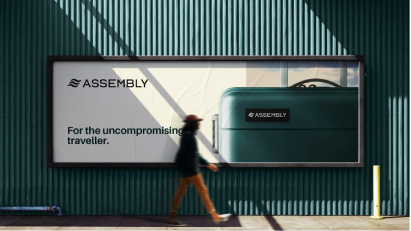
Assembly having been in the luggage industry for 3 years and known for good quality of luggage was struggling with lack of a customer demand due to lack of brand recall.
To help assembly be known in the industry not just for the good quality products but also a great brand.
GreySpace started the project by understanding the founders, the company culture and USPs of the product. We followed the internal study with customer feedback and reviews and tested the hypothesis that current sales assembly enjoyed was majorly attributed to product quality. Assembly wasn’t known for their brand. We studied the market thoroughly the positioning. The results, a lot of brand recognition and recall leading to an audience recognising the brand with great recall.


Kindling had built real authority through years of field research, community work, and humanitarian partnerships, but most of it lived inside the organisation. The external presence did not reflect the depth of the work, and the brand was being read as a young nonprofit rather than the sector-defining voice it had quietly become.
Build a brand that holds the weight of the work. One that funders, partners, and communities could recognise immediately, and one that could grow with the organisation as it moved from discovery into scale.
We started where Kindling itself starts, by listening. The strategy was built from the inside out, anchored in the founder's conviction that local actors are the spark, and Kindling is what helps it catch.
The work began with positioning. Most organisations in this space fall into one of two voices, technical or humanitarian. Kindling needed a third position that bridged both, so we built the brand around the role of facilitator. Not the expert with answers, not the saviour with resources, but the one who creates the conditions for science, knowledge, communities, and action to converge.
From there, we developed the brand core. A purpose that names systemic failures rather than softening them into gaps. A vision that frames fire safety as woven into systems, not added to them. Five values that work as a system, each one reinforcing the others. The personality landed on Sage and Explorer, an archetype blend that could ask brave questions without losing scientific rigour.
The audience model was deliberately non-hierarchical. Six groups, from community actors to corporate partners, each holding equal weight in the ecosystem. The visual and verbal identity followed from there, designed to feel grounded, human, and quietly confident. The tone of voice rejected hero language and saviour narratives, and built in principles like question-led discovery, collective language, and rigorous warmth.
The website was structured as a trust-building tool, not a service list, with clear pathways for funders, partners, communities, and practitioners to find their way in.
The brand is live and being used across Kindling's communications, fundraising, and partnership work. Internally, the team now has a system that reflects what they actually do, and externally, the organisation is being recognised at the level its work has always operated.
Scoped to your business.
Not a fixed package.
Brand strategy is scoped to the size and complexity of the business, not a fixed package applied to everyone. If you are not sure where your project sits, the discovery call is the right place to find out. There is no obligation and no pitch, just a conversation about what you are building and whether we are the right fit.
Most engagements begin within two weeks of alignment.
Frequently asked questions
Everything you need to know before starting a brand strategy engagement with GreySpace.
A brand strategy agency like GreySpace starts with the business problem before touching anything visual. Where a design agency begins with how a brand looks, GreySpace begins with what the brand means: its positioning in the market, who it is genuinely for, how it is differentiated, and what it should stand for beyond making money.
The visual identity, the packaging, the website, the campaigns, all of that follows the strategy. Without it, every design decision is a guess. With it, every decision has a foundation it can be tested against.
At GreySpace, strategy always comes first and that is not an upsell, it is a process requirement. Brand strategy is what your brand means: your positioning, your audience, your purpose, your personality. Brand identity is how that meaning is expressed: the logo, the colour palette, the typography, the tone of voice.
The reason GreySpace will not begin visual identity work without a strategy foundation is that every creative decision should be answerable by the strategy. Great visuals built on unclear strategy look beautiful and say nothing. Most agencies skip this step to start billing sooner. GreySpace requires it because the work only holds up when the thinking underneath it is sound.
A standard GreySpace brand strategy engagement runs three to four weeks from the Discovery and Alignment Session to the final approved document. The process runs across four phases: Discovery and Alignment Session, Research and Market Intelligence, Brand Strategy Framework development, and Presentation and Handover.
What makes GreySpace's process different from a typical agency delivery is that every phase produces a documented output and nothing moves forward without explicit client signoff. The strategy document is delivered in versioned iterations, meaning every version of every recommendation is documented with its rationale, so clients can see not just what GreySpace decided but why.
For larger organisations with multiple stakeholders or complex portfolio structures, timelines extend accordingly and are scoped upfront.
GreySpace scopes brand strategy engagements based on three variables: the size of the business, the number of stakeholders who need to be involved, and the depth of research the market requires. As a guide, startups and early-stage companies typically invest between ₹3.5L and ₹8L. Mid-market and established businesses start from ₹10L upward. Large corporate and multi-stakeholder engagements are scoped individually.
The reason pricing varies significantly is that a single founder D2C brand and a large hospitality group with six audience types require fundamentally different amounts of research, facilitation, and iteration; and GreySpace does not apply a fixed package to either.
At GreySpace, we see four situations that consistently signal a business is ready for brand strategy work. First, when the brand name, identity, or positioning no longer reflects where the business actually is what made sense at launch does not always hold at the growth stage. Second, when founders or team members feel embarrassed handing over a business card or apologise for the website before a client visits it that discomfort is almost always a signal that the brand has fallen behind the business. Third, when the business model or strategy has changed significantly through a pivot, new market, or new ownership, and the brand has not caught up. Fourth, when the business is starting to look and sound like its competitors, and there is no clear reason a customer would choose it over the alternatives.
Any one of these is enough to start a brand strategy conversation. All four appearing together means the work is overdue. GreySpace has written more about these signals in detail. You canread the full breakdown on what triggers a rebrand.
At the end of a GreySpace brand strategy engagement, you receive a comprehensive Brand Strategy Framework document structured across three dimensions. Brand Core covers your purpose statement, vision, and values. Brand Positioning covers your audience profiles, competitive positioning, and the market white space GreySpace identified for you. Brand Persona covers your brand personality, the archetype framework, and full tone of voice guidelines with written examples.
Every recommendation in the document includes its rationale, not just the conclusion. The document is delivered in versioned iterations and signed off by your team before it is finalised. It then becomes the brief for every downstream engagement; identity design, packaging, campaigns, social media so that all subsequent work is grounded in the same foundation.
Yes, and GreySpace considers this the ideal starting point. A new business that begins with brand strategy builds everything from a foundation that holds. A new business that begins with a logo is making design decisions before the most important questions have been answered: who is this actually for, what does it stand for, and why would someone choose it.
GreySpace has built brand strategy for businesses at day zero, where the product exists but the brand has yet to be defined. Starting with strategy at this stage does not slow the process down. It makes every subsequent decision; what the identity looks like, how the website talks, what the packaging communicates — faster and more confident, because everyone working on the brand is working from the same foundation.
GreySpace makes this call based on what has changed, not what looks outdated. If your customer base has fundamentally shifted, or your market has moved in a way that makes your current positioning no longer relevant, that is almost always a full strategy reset. If the business has changed significantly through new ownership, a pivot, or a merger, the same applies.
If you are expanding geographically or adding new products or services, the decision is more nuanced. Sometimes the existing strategy holds and only the portfolio architecture needs to adapt. Sometimes the expansion exposes a gap in the original thinking that needs to be resolved first. GreySpace diagnoses this in the Discovery and Alignment Session before recommending a path, so clients are never paying for a rebrand when a refresh would have done the job.


