How to Choose the Right Brand Strategy Agency
Picking a brand strategy agency is one of those decisions you don't think much about until you're living with the consequences. It quietly shapes your positioning, your pricing power, even how smooth those fundraising conversations feel two years down the line. Get it wrong, and you end up with a polished deck nobody on your team ever opens again. Get it right, and you get a partner who thinks about your business almost as hard as you do.
If you're searching for a brand strategy agency in Delhi, Mumbai, or really anywhere in India, you've probably hit the same wall GreySpace Studios talks about a lot. Most agencies are built to sell you a logo, not a direction. That's not entirely their fault; it's just how the industry priced itself over the years. But it does mean the job of separating the genuinely strategic firms from the ones just good with a design tool falls on you.
Here's what to actually look for, and what to ask, before you sign anything.
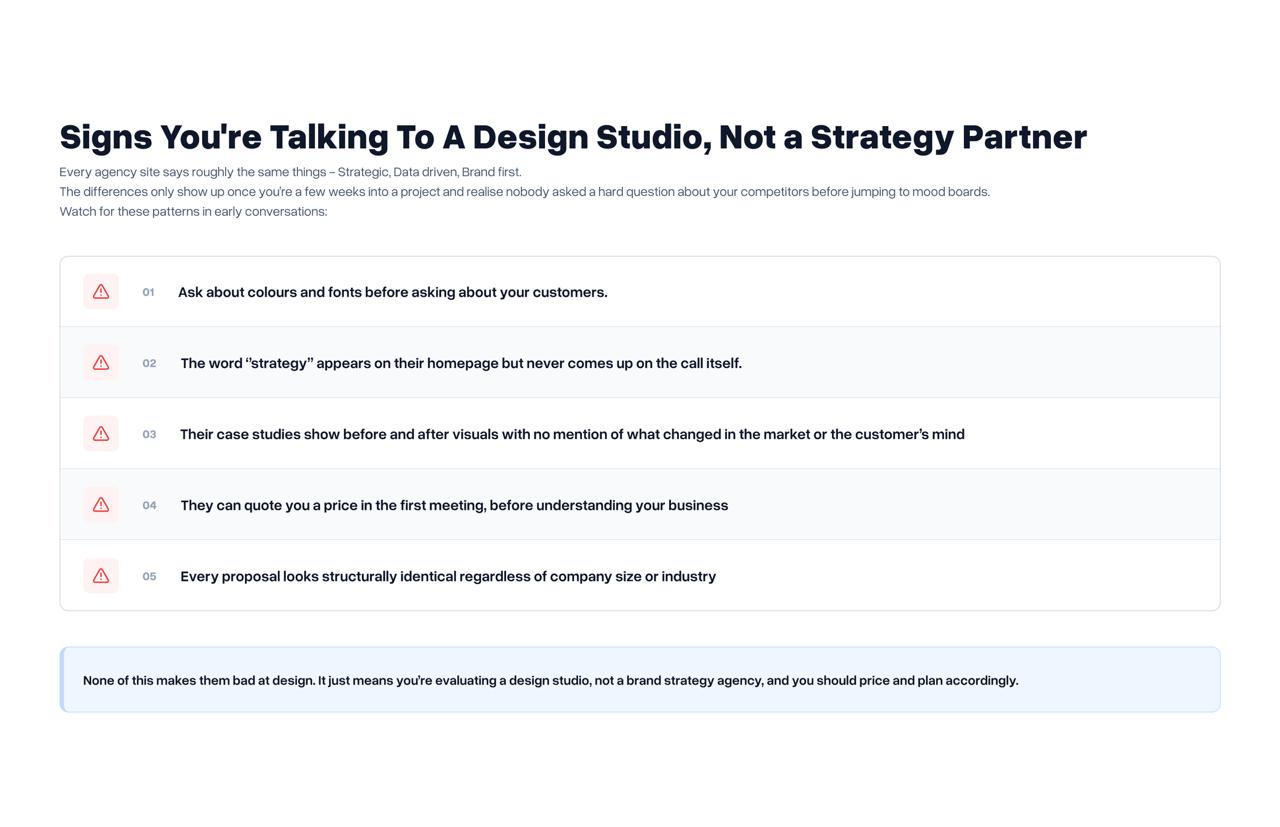

Neither column is wrong on its own. A business with solid positioning that just needs a visual refresh can be perfectly served by the left side. A business that isn't sure why it exists beyond making money needs the right.
A Simple Process For Narrowing Your Shortlist
Instead of comparing ten agency websites side by side, run each contender through this sequence.
Let's go through what each of those steps looks like in practice, with a lot more of the small, practical questions you should actually be asking at each stage.
Step 1: Get clear on what you need. Before you even open a browser tab, sit with your own team and answer these:
- Has the business changed more than the brand has kept up with
- Are you preparing for something specific, a fundraise, a launch, a new market
- Do different people on your team describe the company differently when asked
- Is the current identity inconsistent across touchpoints, or just outdated looking
- Would a visual refresh alone actually solve the problem, or is it deeper than that
Step 2: Build a shortlist of agencies that show real thinking. When you're scanning portfolios and case studies, look for:
- Mentions of positioning, audience behaviour, or competitive white space, not just visuals
- A described process with named phases, not a single vague "brand workshop"
- Case studies that explain a business problem before showing the design solution
- Evidence they've worked with businesses your size, not just enterprise logos on a slide
- Team bios that include strategists and researchers, not only designers
Step 3: Ask pointed questions about how they run projects. A genuine brand strategy agency should be able to answer all of these without stalling:
- What do you deliver at the end of discovery, before any design starts
- How do you research our competitors and our audience
- What happens if we disagree with a strategic recommendation
- How many rounds of revision are built into each phase
- Who on your team will actually be working on our account day to day
Step 4: Check whether you can actually work together. This part gets skipped constantly, and it shouldn't:
- Do they push back on ideas that seem weak, or agree with everything you say
- How fast do they respond, and does that match your pace of work
- Is there one clear point of contact, or will you be juggling five people
- Do their questions in the first meeting feel specific to your business or generic
- Would you want to sit through a twelve week project with this team
Step 5: Compare scope against investment, not price tag against price tag. A serious brand strategy agency will scope the engagement to your business rather than sell you a flat package. Ask:
- What specifically changes in scope between a startup and an enterprise client
- Is pricing tied to deliverables, timeline, or both
- What's excluded from this scope that might come up as an extra cost later
- How is success measured at the end of the engagement
- What happens if the project runs longer than planned
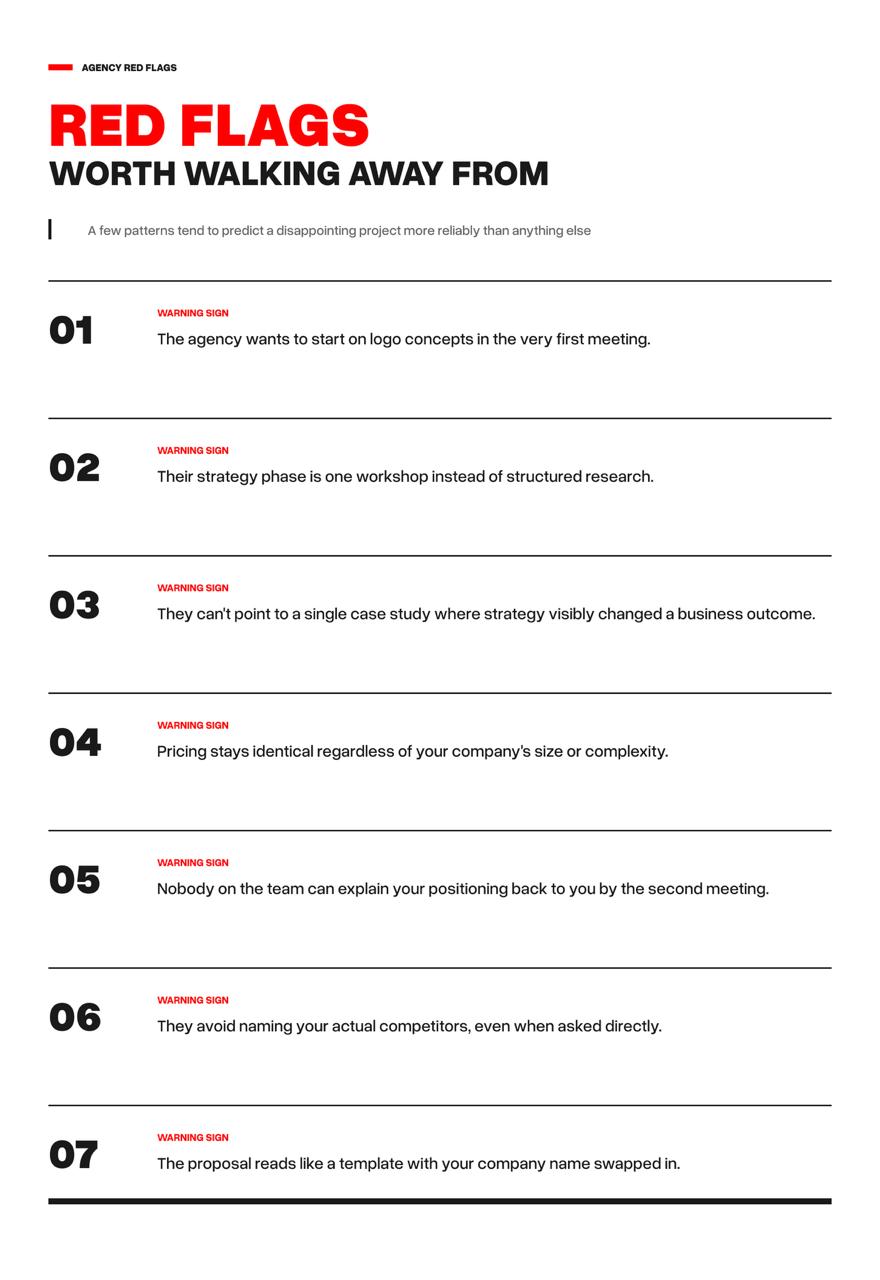
Where GreySpace Fits Into This
GreySpace Studios works from a simple premise. Identity is the expression, strategy is the foundation, and no amount of polish fixes an unclear foundation underneath it. As a brand strategy agency, their process runs through four phases, discovery and alignment, market intelligence, strategy framework, and handover, before any identity work begins. Every engagement is scoped to the business rather than sold off a fixed rate card, which is worth noticing given how much of the industry still runs on templated pricing.
If you're weighing agencies right now, it's genuinely worth running the checklist above on GreySpace too and seeing how the conversation holds up against it.
FAQs
Shubham Harish


